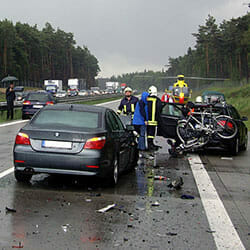
Post-Traumatic Stress Disorder and Car Crashes

  • January 24, 2017
  • EVANS / DESHAZO / REILLEY

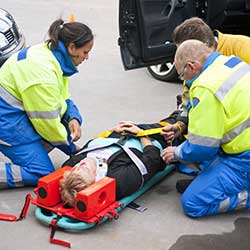
In 1980, the American Psychiatric Association added post-traumatic stress disorder to its manual of mental disorders. The official diagnostic criteria for PTSD say symptoms may occur following a distressing or shocking event “that is outside the range of usual human experience.” Initially, PTSD was considered a condition that affected primarily combat veterans, but over the years, psychiatrists have learned a lot about how PTSD affects civilians, including survivors of serious car crashes. The Prevalence of PTSD in Crash Survivors The U.S. Department of Veterans Affairs says about 9 percent of people who are involved in serious crashes that cause injuries develop PTSD. That may sound like a low number, but roughly 3.5 million peop[...]
Uninsured and Underinsured Coverage May Help Crash Victims

  • December 21, 2016
  • EVANS / DESHAZO / REILLEY

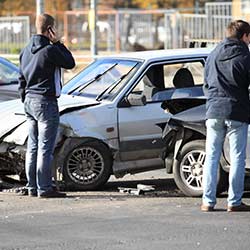
Texas law requires drivers to carry basic liability car insurance. If a driver is at fault for a crash, their basic liability coverage would apply to other parties’ vehicle damage and personal injuries, but it would not cover their own injuries or damage. At a minimum, Texas car insurance policies must provide: $30,000 for each person (up to $60,000 per accident) -and- $25,000 per accident, for property damage. That $30,000 doesn’t go far when people suffer serious or disabling injuries or when multiple people are injured in a crash. Medical bills can easily exceed $30,000 just for the treatment of a broken bone. When your costs exceed what the at-fault driver’s policy can pay, you may sue that driver for damages[...]

What Drivers Can Do to Control Road Rage

  • September 16, 2016
  • EVANS / DESHAZO / REILLEY

In May, two drivers and their passengers exchanged blows on a Houston street, after the driver of the truck refused to let the driver of the car merge into his lane. Cellphone footage shows the incident escalating – first, with the parties arguing outside their vehicles, then with the car passenger throwing a drink at the truck passenger. A fight broke out and ended quickly, but before speeding off, the truck reversed and deliberately crashed into the car. Road rage – an altercation between angry drivers – often leads to serious crashes, injuries, and fatalities. During some incidents, drivers lose their temper and fire a gun at another driver, or brandish weapons in a street fight. And, usually, witnesses report seeing one driv[...]

Takata Airbags Continue to Harm Drivers

  • May 27, 2016
  • EVANS / DESHAZO / REILLEY

In April, a 17-year-old girl died in a crash near Houston, Texas, when she rear-ended another car and the airbag in her 2002 Honda Civic sent shrapnel into her neck. She was the tenth person to die as a result of a faulty Takata airbag inflator, and more than 100 people have been injured by these defective car parts. To date, 22 automotive brands have issued recalls to repair the faulty inflators, and more than 8 million repairs have been completed. But the recall continues to expand – in May, Mercedes-Benz added nearly 200,000 cars to the recall and Honda added 21 million cars. The actual number of faulty airbags is therefore hard to determine, but what is known is that people who have purchased used cars manufactured in the past [...]

Buyer Beware: The Risks of Flood-Damaged Cars

  • May 26, 2016
  • EVANS / DESHAZO / REILLEY

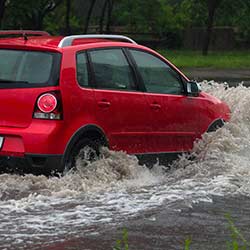
The period between April 2015 and March 2016 was the second wettest on record for Texas. Torrential rains raised the Sabine River in Deweyville to 33.24 feet on March 15, 2016, breaking a record set in 1884. About a month later, 17 inches of rain fell in Houston in 24 hours, and floodwaters caused at least eight deaths and an estimated $5 billion in damage to buildings and vehicles. Last June, Texas Monthly magazine reported that May floodwaters were believed to have damaged up to 10,000 cars in the state, primarily in Dallas, Austin, San Antonio, and Houston. And while Texas law requires sellers of used cars to declare via the vehicle’s title whether a vehicle has been rebuilt or previously deemed too damaged to be roadworthy, som[...]

NHTSA Launches Efforts to Reduce Drowsy Driving

  • April 27, 2016
  • EVANS / DESHAZO / REILLEY

In March, the National Highway Transportation Safety Administration released its Drowsy Driving Research and Program Plan, which outlines several initiatives intended to address the problem of drowsy driving. Drowsiness is estimated to be a factor in 2 to 20 percent of annual traffic fatalities and about 72,000 crashes per year. But the actual number of drowsy-driving crashes and fatalities may be higher, because at present there’s no standardized method police departments use to identify drowsy drivers and cite drowsiness in their crash reports. The NHTSA aims to develop such standards, to better understand the impact of drowsiness, and to educate the public about the dangers of drowsy driving. How Tiredness Affects People Busy [...]

Texas Crash Stats Highlight Accomplishments and Needs for Improvement

  • March 2, 2016
  • EVANS / DESHAZO / REILLEY

Looking at crash statistics can reveal a lot about the most important traffic safety issues in Texas. And when statistics indicate a certain factor is to blame for a growing number of deadly crashes, existing laws may need to be strengthened, or new laws developed, to reverse the trend. Historically, it often takes years of serious and fatal accidents before legislators create laws intended to improve safety. For example, it wasn’t until 1968 that automakers were required to install seat belts in all new cars, and Texas didn’t have a primary seat belt law until the 1980s. Those laws came about because government officials recognized the important role seat belts play in saving lives. So what do Texas statistics tell us now? Re[...]

Texas Slowpoke Law

  • November 27, 2015
  • EVANS / DESHAZO / REILLEY

In Texas and many other states, the law requires drivers on multi-lane highways to use the left lane only for passing. The intent of the “Texas Slowpoke Law” is to reduce the risk of vehicle crashes and ensure the smooth flow of traffic. But it’s not uncommon to see motorists tooling along in the left lane on highways. The Texas Department of Public Safety dedicated a day in 2013 to enforcing the left-lane law, mainly to raise awareness of its existence. State troopers issued warnings or tickets to motorists who were staying in the left lane instead of using the left lane to pass. Texas DPS Sgt. Gordon Schneider told the Houston Chronicle that “a rash of road-rage incidents” had been attributed to people who were driving[...]

Austin Crash Statistics

  • November 6, 2015
  • EVANS / DESHAZO / REILLEY

Austin Traffic Fatalities Report Reveals Contributing Factors On Oct. 14, the Austin Police Department issued a news release about the 82nd traffic fatality of 2015. It was the 74th fatal crash since Jan. 1 – nearly double the number of fatal crashes measured in the same period last year. Police want to understand why fatal crashes have increased in 2015, so they’re taking a closer look at contributing factors. APD’s recent Traffic Fatalities Brief reveals some insights about the 76 fatalities that occurred between Jan. 1 and Aug. 31. Methodology and Commonalities The APD report studied characteristics of each person found to be at fault for a fatal crash, regardless of whether that person survived, along with incident character[...]

National School Bus Safety Week

  • October 16, 2015
  • EVANS / DESHAZO / REILLEY

Each year during the third week of October, school districts around the country observe National School Bus Safety Week, which this year is Oct. 19-23. Many people may think school bus safety is an issue primarily under the control of bus drivers, but other motorists play a big role in the safety of school bus occupants, too. Careless Motorists Distracted or excited children entering or leaving school may not always be aware of danger in the streets. That’s why fines for traffic offenses are higher in school zones. Too many antsy drivers, however, blow through school zones with no regard to posted speed limits. Texas law requires drivers to stop when approaching a stopped school bus with flashing red lights. The law is in place to p[...]